


Millennials are reshaping North Carolina divorce trends by changing the inputs that produce divorce statistics.
Millennials marry later, cohabit more before marriage, and delay major life decisions until after education and career steps.
Those shifts change with divorces, how many divorces occur, and which divorce rate metric yields the most accurate trend signal.
The CDC defines North Carolina’s baseline state metric in Divorce. Stats of the States, while demographers anchor the married population trend language using the NCFMR refined divorce rate series.
Millennials are changing divorce trends in North Carolina by delaying marriage, reducing early married years at risk, and shifting first divorce timing into later ages.
Millennial marriage patterns can lower early divorce rates, even when relationship conflict persists outside marriage statistics.
Millennial behavior changes divorce math in three measurable ways.
| Millennial Shift | Mechanism | Effect On NC Divorce Counts | Effect On Trend Interpretation |
| Later first marriage | Fewer marriages in early adulthood | Fewer divorces among young adults | Crude rates can fall without proving lower conflict |
| Cohabitation before marriage | Compatibility screening before legal marriage | Fewer early divorces | Breakups move outside divorce statistics |
| Dual income sequencing and debt load | Higher negotiation complexity | More delayed filings | Timing and disclosure quality matter more |
North Carolina divorce trend claims require consistent denominators because the CDC publishes a crude divorce rate per 1,000 residents, while demographers often use refined divorce rates tied to married populations.
Denominator alignment prevents false conclusions that “Millennials lowered divorce.”
The CDC uses a statewide metric measuring divorces per 1,000 residents, and the CDC’s North Carolina definition appears in Divorce Stats of the States.
The same CDC program also publishes a multi-year state table of divorce rates from 1990 to 2023, which supports consistent trend comparisons across decades.
North Carolina adds a second lens through the State Center for Health Statistics, which publishes marriage and divorce statistics in the NCDHHS vital statistics tables.
County-level variation becomes visible when you use a county report, such as the 2020 marriage and divorce rates by county and month.
| Metric | Numerator | Denominator | Best Use | Common Mistake |
| CDC crude divorce rate | Divorces in a year | 1,000 residents | State comparisons and baseline trend direction | Treating crude rate as risk among married couples |
| Divorce count | Divorces in a year | None | Volume and system capacity context | Treating counts as proof of rising divorce risk |
| Marriage rate | Marriages in a year | 1,000 residents | Marriage prevalence context | Ignoring the denominator problem |
| Refined divorce rate | Divorces among women | 1,000 married women | Trend clarity among married populations | Comparing refined rates directly to crude rates |
If you’re ready to get started, call us now!
North Carolina’s CDC crude divorce rate supplies a statewide comparison baseline, and NCDHHS tables add county-level texture.
Millennial influence shows up in the composition because delayed marriage can reduce divorce rates and shift divorce timing to later ages.
The statewide comparison starts with the CDC’s North Carolina divorce rate in Divorce. Stats of the States, and the long-run time series of state divorce rates from 1990 to 2023, help separate short-term movement from structural change.
County variation matters because North Carolina does not behave like one market.
The State Center for Health Statistics publishes county reporting through NCDHHS vital statistics tables, and a dataset such as 2020 marriage and divorce rates by county and month highlights differences between the county of occurrence and the county of residence.
Student loans, housing costs, and shared accounts can derail settlement talks fast. N. Lawrence Hudspeth III can assess disclosure gaps and recommend mediation or court steps. Schedule an appointment.
Millennials are changing North Carolina divorce trends by delaying marriage, increasing premarital cohabitation, and delaying financial decisions.
Later marriage often shifts first divorce timing later and can reduce early divorce counts among younger adults.
Millennial-driven change usually reflects timing and denominator structure, not a single preference.
Later marriage reduces early married years at risk, which shifts divorce timing into later ages and changes the distribution of divorces by life stage.
Generational timing shifts are clear in generational divorce trends and in divorce rates by age and life stage.
Cohabitation changes which breakups appear in divorce statistics. Cohabitation can move incompatibility outside marriage-based measures, which reduces early divorce counts without eliminating relationship churn.
| Input | What Changes | Why It Matters | What You See In Stats |
| Later marriage | Fewer marriages at younger ages | Fewer early married years at risk | Lower divorce counts among young adults |
| Cohabitation | Relationship testing before legal marriage | Breakups shift outside divorce records | Lower early divorce counts |
| Education and career sequencing | More stability before marriage | Fewer early stress-driven filings | Divorce timing shifts later when divorce occurs |
North Carolina divorce procedure rewards early planning because the separation period becomes the operational phase for budgeting, custody schedules, and documentation.
Millennial households often enter this phase with dual-income planning, digital financial trails, and complex housing decisions.
North Carolina’s separation requirement treats the first phase of a breakup as a planning window, and timeline expectations become clearer when the process language is anchored in the North Carolina divorce process.
Many couples make the biggest practical decisions during the separation period, including housing, parenting schedules, and budget baselines.
Custody planning often creates the greatest day-to-day friction, and uncertainty decreases when families understand how child custody hearings work in NC.
| Timeline Window | Primary Planning Goal | Documents To Capture | Decisions That Prevent Rework |
| Months 0 to 3 | Stabilize housing and baseline budget | Income, expenses, accounts, debts | Temporary living plan, bill payment method |
| Months 3 to 6 | Build a workable parenting schedule | School calendar, childcare, routines | Exchange plan, communication protocol |
| Months 6 to 12 | Prepare for settlement or filing | Updated statements, valuations, disclosures | Mediation readiness, filing strategy |
If you’re ready to get started, call us now!
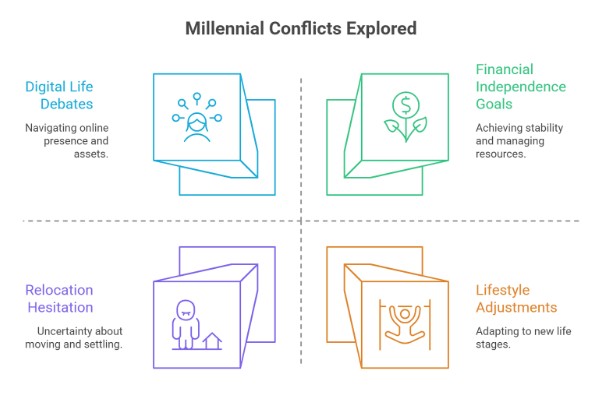
Millennial divorce negotiations in North Carolina often concentrate on housing affordability, student loan liabilities, shared debt, and digitally tracked finances.
Those categories increase negotiation complexity and raise the value of structured disclosure.
Housing decisions drive divorce timing because they determine school stability, commute feasibility, and monthly burn rate.
Rising housing costs can turn a divorce budget into a feasibility issue rather than a preference issue.
Student loans and consumer debt increase disputes when spouses disagree about allocation, repayment timing, or what constitutes marital responsibility.
Debt inventory improves outcomes when it lists balances, interest rates, payment schedules, and account ownership.
Digital household infrastructure expands the inventory list. Digital inventory includes subscription ecosystems, device financing, app-based payment histories, cloud photo libraries, and shared password managers.
Digital communications also create permanent records that can inflame conflict when boundaries stay unclear.
Mediation often works well in Millennial divorce cases when both spouses exchange information openly and negotiate without intimidation.
Litigation becomes necessary when safety risks, coercion, or financial nondisclosure impede the formation of reliable agreements. Process choice should match the facts.
A lower-conflict process through mediation services can reduce scheduling friction and lower the temperature of negotiation when disclosure and participation remain consistent.
A court-driven path through litigation services is the appropriate tool when one party refuses to disclose, violates interim agreements, or creates a safety risk.
| Situation | Mediation Fit | Litigation Fit | Why The Fit Changes |
| Full disclosure and stable communication | High | Low | Voluntary agreement becomes realistic |
| Missing financial documents | Medium | High | Court tools may be needed to compel disclosure |
| Safety concerns or coercion | Low | High | Enforceability and protection matter |
| High-conflict parenting disputes | Medium | High | Structure and enforceable orders reduce chaos |
Financial disputes escalate fastest when one spouse believes the numbers are incomplete, and disclosure consequences become concrete due to inadequate financial disclosure in a North Carolina divorce.
Millennials planning divorce in North Carolina improve outcomes by mapping the separation timeline, documenting parenting logistics early, and selecting mediation or litigation based on safety and disclosure realities.
A structured start reduces rework and protects co-parenting stability.
Many couples reduce uncertainty when the timeline is anchored to the North Carolina divorce process, because the separation period dictates what can happen now and what must wait.
If divorce is coming, move with a plan that aligns with North Carolina’s rules and your family’s schedule. N. Lawrence Hudspeth III, Attorney at Law, is ready to help. Contact us.
If you’re ready to get started, call us now!
Do Millennials Divorce Less In North Carolina
Millennials may appear to divorce less because later marriage reduces the number of early-marriage years at risk, and fewer Millennials marry at younger ages. Lower divorce counts can coexist with relationship breakups outside marriage, according to statistics.
What Is The Current Divorce Rate In North Carolina
The CDC measures the North Carolina divorce rate as divorces per 1,000 residents. Stats of the States. Trend interpretation improves when the crude rate is treated as a statewide baseline rather than as a risk measure for married couples.
Why Does Later Marriage Change Divorce Timing
Later marriage shifts the first divorce later because legal marriage begins later. Later marriage may also correlate with greater stability, as partners often enter marriage after completing education and achieving financial security.
Does Cohabitation Affect Divorce Trends
Cohabitation affects divorce trends because many breakups occur before legal marriage. Cohabitation can reduce early divorce rates by filtering incompatible relationships before marriage.
Why Do Different Sources Give Different Divorce Rates
Different sources use different denominators. The CDC uses divorces per 1,000 residents in its Divorce data. Stats of the States, while demographers use married population benchmarks such as the NCFMR refined divorce rate.
Where Do North Carolina County Divorce Tables Come From
County tables come from North Carolina’s State Center for Health Statistics inside NCDHHS vital statistics tables, and county variation becomes visible through datasets such as 2020 marriage and divorce rates by county and month.
How Does the One-Year Separation Rule Change Planning
The separation window underscores the value of early budgeting, parenting schedules, and disclosure planning, as most operational decisions occur before filing. Timeline expectations stay clearer when anchored to the North Carolina divorce process.
Mediation fits when both spouses share documents and negotiate without intimidation through mediation services. Litigation is appropriate when safety risks, coercion, or missing disclosures require enforceable procedures through litigation services.
Office

Links